
Grazing and rotational grazing
For grazing, grass with a height of approximately 15 cm is ideal. To maintain an adequate supply of grass, we recommend using a rotational grazing system with multiple paddocks (3 to 5).
What is the ideal grass height?
Grass that is approximately 15 cm tall is well balanced in terms of composition and suitable for horses. We recommend offering grass to horses at this stage. To achieve this, a rotational grazing system with multiple paddocks (3 to 5) is required.
Allow the horses into a paddock once the grass has reached the ideal height. Let them graze it down and move the horses to the next paddock as soon as it has reached the desired height. The grazed paddock can then be maintained and fertilised. In this way, your horse will always have access to grass of the right quality, while the paddocks can be properly managed and maintained.
Read more about horse pasture maintenance.
How does a grass plant grow?
The growth of a grass plant begins with the leaf. Gradually, a stem develops, followed by the second, third and, in some cases, fourth leaf. If the plant continues to grow beyond this stage, the stem elongates and produces a seed head containing seeds. After this stage, the plant no longer continues its development.
The quality and palatability of fresh grass depend greatly on its stage of growth. Young grass (1-2 leaves) is very lush and fresh, with a high protein content. However, it contains little structural fibre. Grass in a more advanced growth stage (3-4 leaves), on the other hand, contains less protein but provides more structure.
Relationship between protein and fibre
Protein and fibre are closely linked: more fibre generally means less protein, and vice versa. For horses, achieving the right balance is essential, as young grass that is high in protein and low in fibre can lead to health issues, whereas more mature, fibre-rich grass is better suited to their need for fibre-rich forage.
- The grass stem begins to develop around the 3rd to 4th leaf stage.
- Visible stem elongation follows from the 4th to 5th leaf stage onwards.
- More stem growth = lower feed value (due to higher fibre and lignin content).
- Young, leafy grass provides the highest nutritional value.
Horse Master. Healthy grass for horses
Horse Master is a pasture mixture specially tailored to the needs of horses. It contains grass varieties with a low growing point, enabling rapid regrowth after grazing or mowing. The varieties in Horse Master have also been selected for their low fructan content. The RPR technology in Horse Master creates a natural network of roots with horizontal stolons. This results in a very dense and durable sward that can withstand intensive hoof traffic.
Healthy forage for horses

Hay Master
-
Fresh and tasty hay for your horse, cows or small livestock
-
High roughage production
-
Excellent drought resistance
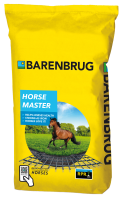
Horse Master
-
Plenty of grass for grazing
-
Highly resistant turf with RPR technology
-
Good regrowth