Portuguese farmers leading the way in sustainable forage and livestock production
Across Portugal’s interior regions, forward-thinking farmers are combining tradition, innovation and sustainability to build resilient and highly productive livestock systems. From mixed family farms to specialised beef and dairy operations, these Portuguese producers share first-hand experience of how carefully selected forage mixtures, precision management and long-term planning are helping them maximise performance, improve animal welfare and adapt to increasingly challenging climatic conditions. Their testimonials offer valuable insights into practical, field-proven solutions that deliver results on the ground.
Source: Voz do Campo
Torre do Frade Farm is a family legacy with a sustainable future
In the heart of Alto Alentejo, in the municipality of Monforte, lies Monte da Torre do Frade. This agricultural enterprise, rooted in a centuries-old family tradition, is a remarkable example of integrated and sustainable management, where vineyards, livestock, forestry and arable crops coexist in a harmonious and strategic way.
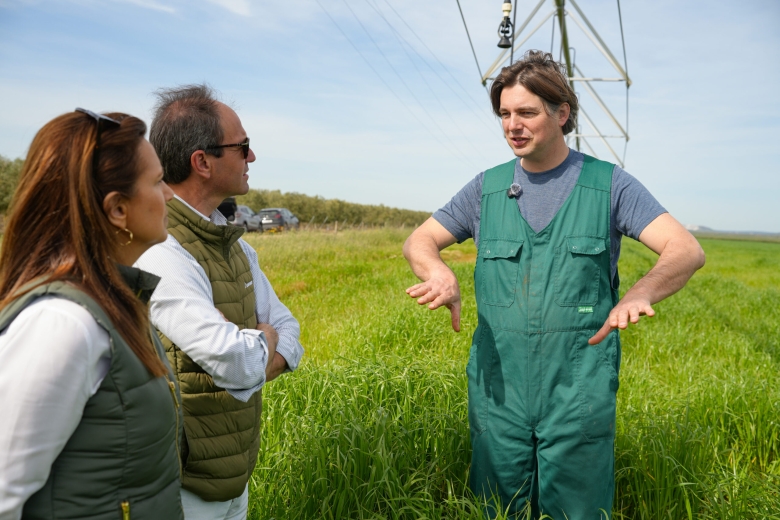
On the header image from left to right: Luís Machado (Technical Manager at Torre do Frade), Filipe José (Technical Commercial Representative at Lusosem), Fernando Carpinteiro Albino (Managing Director of Torre do Frade) and Filipa Setas (Marketing, Communication and Development Director at Lusosem).
Fernando Carpinteiro Albino, Managing Director of Torre do Frade, emphasises that “this is a 100% family-run farm, whose bond with the land is inseparable from its origins as a family”. It is precisely this connection that underpins the forward-thinking decisions made over the years. Located in a typically rainfed area, without access to large public irrigation schemes, Torre do Frade invested early and wisely in the construction of its own reservoirs. “If I hadn’t built the reservoirs we have here, which we constructed ourselves more than 20 years ago, I would probably not be here talking to you today,” the managing director told us. Awareness of climate change is clear: “Our experience shows that climate change is a reality. We have to adapt to it.”
Fernando Carpinteiro Albino explains that the farm’s strategy is based on not “putting all our eggs in one basket”. Rather than relying on a single crop or production system, Torre do Frade spreads risk and maximises resources through a mixed and multifunctional farming approach. “If I only had a monoculture here, I would probably have struggled to get through all these years,” he explains.
Cereals with precision irrigation
Although fundamentally rainfed, Torre do Frade has an improved irrigation system using pivot irrigation. This allows watering at critical stages for cereals — April, May and early June — effectively doubling productivity. “It is enough for yields to be twice those of the same field under strict rainfed conditions,” the managing director highlights.
Torre do Frade is also a founding member of Carnalentejana and maintains a herd of purebred Alentejana cattle, reared under extensive conditions. “Our cows don’t know what a shed is, they don’t know what shelter is. Their shelter is the stars,” says Fernando Carpinteiro Albino with pride. The farm is certified under the Welfair® scheme, one of the most demanding animal welfare certifications.
ProtaPlus – a rich mixture of clovers and ryegrass
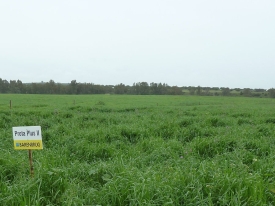
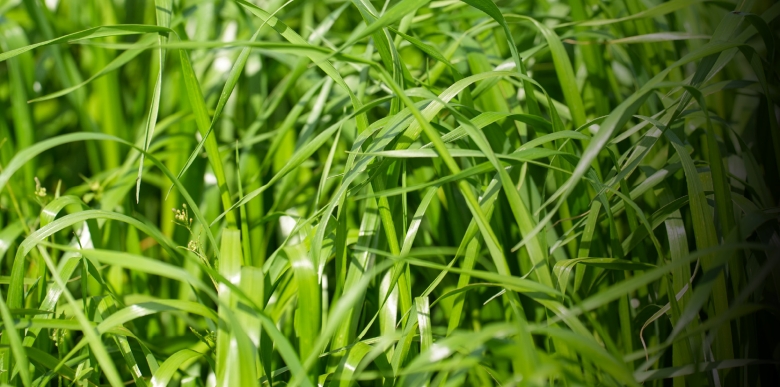
One of the key components of cattle nutrition is the use of forage mixtures, such as ProtaPlus, marketed by Lusosem. This is a rich mixture composed of three types of clover and ryegrass. “This offers enormous nutritional value for animal feed, particularly for cattle,” he states. “This is an example of biodiversity. This is true biodiversity,” he stresses.
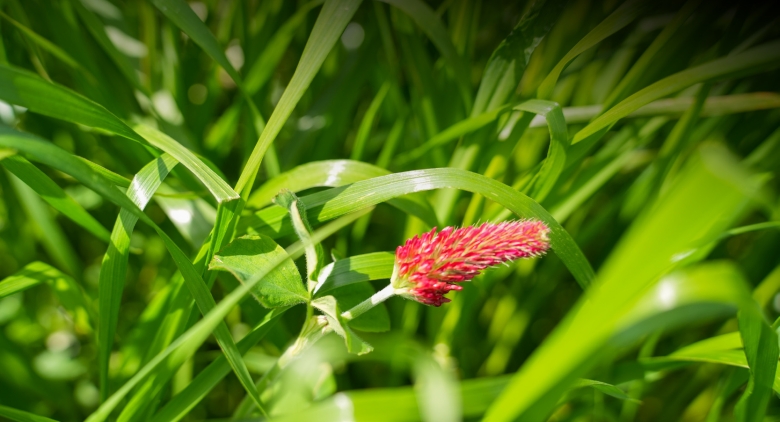
According to Fernando Carpinteiro Albino, ProtaPlus allows for multiple uses throughout the year: “From as early as November and December, we can have the cattle grazing. And while they are feeding, they are also adding organic matter to the soil.” Under ideal irrigation and climatic conditions, up to three cuts can be achieved, as well as use for hay. “Here at home, we make hay for the cows. We don’t use any other type of feed, because this is what we believe in,” he explains.
The farm continues to evolve. Today, in addition to soft and durum wheat and triticale, crops such as green peas, green beans and oilseed rape for biodiesel are also being trialled.
Viticulture rooted in tradition and sustainability
A significant part of the farm’s area is dedicated to vineyards, covering around 55 hectares, of which 20 hectares are white varieties and the remainder red. According to Fernando Carpinteiro Albino, Torre do Frade wines are recognised for their quality, offering a diversified range that includes “entry-level wines” such as Petit Virgo, alongside more sophisticated wines like Virgo.
The farm places strong value on tradition and sustainability in viticulture, adopting practices that respect the region’s soil and climate conditions. “We have excellent conditions here for producing good wines. We are in the Borba demarcated region,” he points out. Torre do Frade continues to prioritise local labour, particularly during harvest, which is carried out manually. “Almost all our workers are from the village, which helps retain population in the interior of the country,” he comments.
In addition to vineyards and livestock, Torre do Frade also includes forestry, with holm oaks as the dominant species in Alentejo. “Acorns are part of our cattle’s diet,” which, according to Fernando Carpinteiro Albino, makes a difference in meat quality, being rich in omega-3. Furthermore, holm oak branches contribute to feeding during the most critical months, while grazing helps keep land clean and resilient to fire.
Lusosem is committed to the continuous renewal of its high-quality forage catalogue to increase farm efficiency and profitability. With a strong focus on grass and legume seeds — essential for milk and meat production — the company promotes nutritional programmes that maximise livestock productive potential. These forages are an excellent source of protein, allowing farmers to improve returns by investing in quality seed. In partnership with Barenbrug, and taking into account factors such as cutting regime, intensity and climate, Lusosem strengthens its offering with products such as the high-performance annual ryegrass Barspectra II and the ProtaPlus annual ryegrass and clover mixture, both well-established references in the market.
ProtaPlus boosts production at Monte Granja do Peral with high-quality forages from Lusosem
Miguel Minas, Monte Granja do Peral (Arronches): “We are essentially beef cattle producers. Around 80% of what we sow on our farm, which covers about 500 hectares, is for animal feed. The aim is to ensure our own feed supply, and in years with greater forage availability, such as silage or hay, we may sell some surplus. But the main idea is always to sow to feed our animals.
We chose to use the ProtaPlus mixture because it is well balanced, mainly due to the presence of clovers, which help offset the nitrogen demand of ryegrass. Another major advantage of this mixture, in our view, is the volume of green mass it provides. In years like last year, we have already made silage, and this year we intend to repeat the experience. The goal is always to ensure we have enough forage stored to feed the animals.”
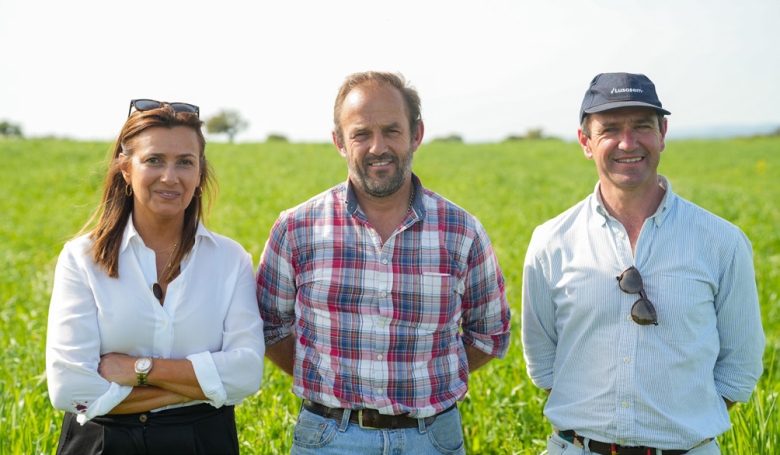
From left to right: Filipa Setas (Marketing, Communication and Development Director at Lusosem), Miguel Minas (Farm Manager at Monte Granja do Peral – Arronches) and Filipe José (Technical Commercial Representative at Lusosem).
Barspectra II: High fibre digestibility and high protein for productive systems
“At Herdade das Caldeirinhas, we operate a dairy farm with around 550 animals in production and cultivate approximately 330 hectares. Of these, 190 hectares are irrigated using central pivot systems. Our production mainly includes summer maize, and during winter we use the irrigated areas to sow ryegrass or triticale.
We choose to grow ryegrass closer to the farm and triticale in more distant areas, where we carry out a single cut. Ryegrass, particularly due to its use for lactating cows, needs to provide good fibre digestibility. This is where Barspectra II becomes essential. This product has been a great ally, offering the flexibility we need at cutting time, while maintaining excellent fibre digestibility and ensuring high protein and sugar levels.”
From left to right: Filipa Setas (Marketing, Communication and Development Director at Lusosem), Filipe José (Technical Commercial Representative at Lusosem)and Gilberto Van Hal, Managing Partner at Herdade das Caldeirinhas (Elvas).
“We are at Herdade dos Lobatos, in Arronches, Portalegre district, on a Barspectra II field intended for silage production to feed beef cows and fattening steers. This farm is exclusively dedicated to meat production. We have been working with this producer for several years, providing continuous technical support throughout the year. Barspectra II has been our main choice due to its ease of management. We have some areas that occasionally suffer from waterlogging, and in drier years, Barspectra II has shown remarkable adaptability to different climatic conditions.”
Related articles

ProtaPlus
-
The highest grass yields
-
The benefits of nitrogen
-
Drought resistant
Barspectra II
-
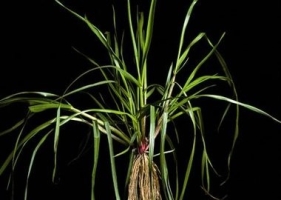
Tetraploid Westerwold ryegrass
-
Higher dry matter yields, particularly in the first cut
-
Exceptional spring growth and has a very good digestibility